 Skip to content

Fire Alarm Monitoring that Protects your Property 24/7
24/7 Emergency Service:
Fire risks do not wait, and neither should your protection. At Sprinklermatic, our Fire Alarm Monitoring service delivers real-time response, constant supervision, and complete peace of mind for commercial properties. Whether you manage a healthcare facility, retail center, or industrial complex, you need a system that reacts instantly and keeps your people and assets safe.
Our monitoring connects your fire alarm system to a dedicated central station staffed by trained professionals. The moment an alarm is triggered, signals are verified and emergency responders are dispatched without delay. This rapid response helps minimize damage, reduce downtime, and protect lives.
Why Fire Alarm Monitoring Is Essential For Commercial Properties
For facility managers and property owners, compliance and safety go hand in hand. Fire Alarm Monitoring ensures your system meets local codes, insurance requirements, and life safety standards. It also removes the risk of missed alarms, especially in multi-tenant or large-scale environments where manual oversight is not enough.
With 24/7 monitoring, your system is always active even after hours, during holidays, or when buildings are unoccupied. This level of coverage is critical for preventing small incidents from becoming major losses.

Small Integration And Reliable Performance
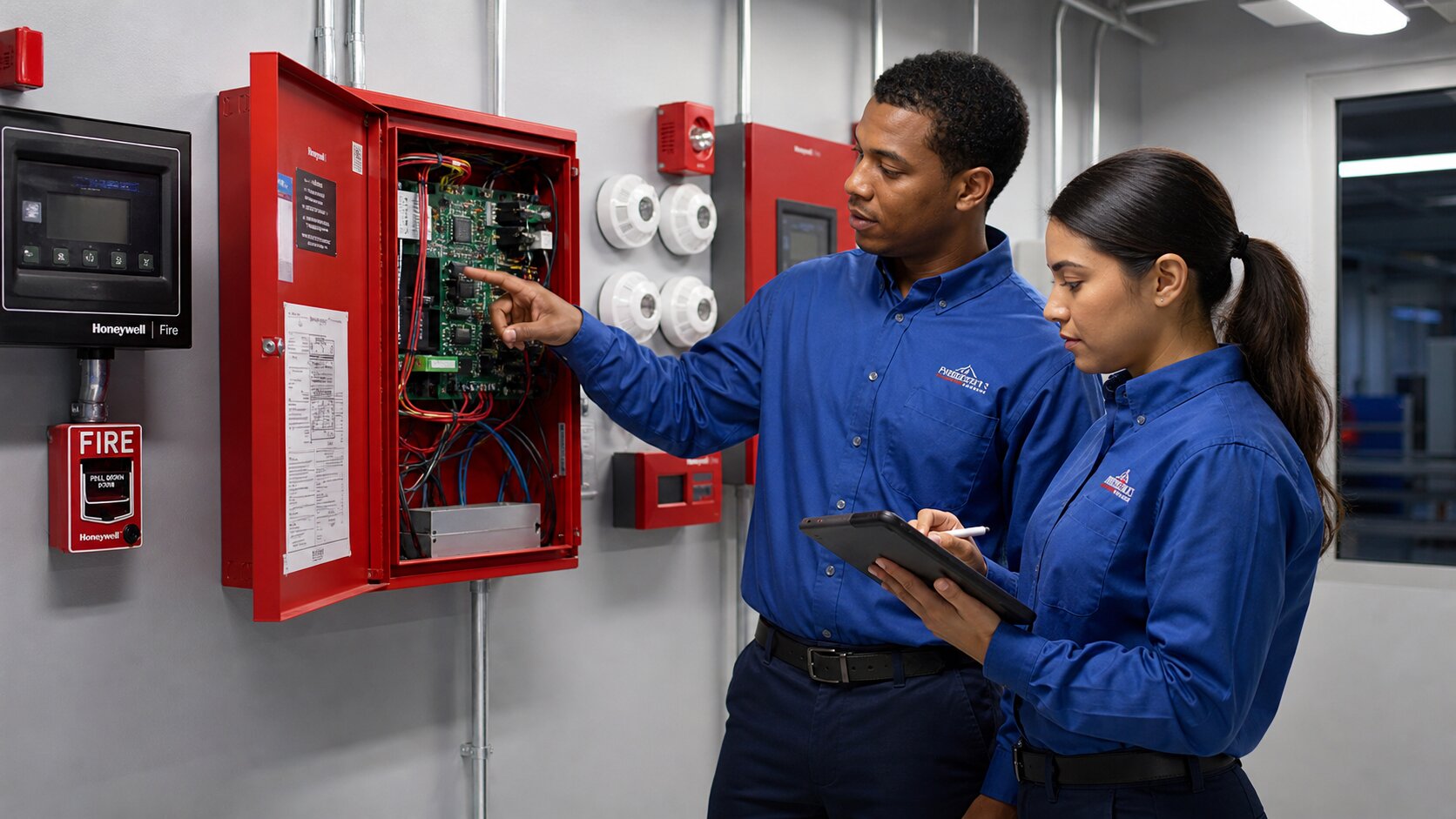
Sprinklermatic provides seamless integration with modern fire alarm systems, including smart diagnostics and system health checks. Our monitoring service can detect issues such as low battery, system faults, or communication failures before they become critical problems.
You also gain access to detailed reporting and alerts, helping you stay informed and proactive. For contractors, architects, and engineers, this means designing and delivering systems that meet both performance and compliance expectations.
Tailored Solutions For Your Industry
Every property has unique needs. We customize Fire Alarm Monitoring solutions for healthcare facilities, schools, retail centers, hospitality properties, and industrial sites. Our team works closely with property managers and developers to ensure full coverage and scalable protection.
From new construction projects to retrofitting existing systems, we make implementation simple and efficient.

Why Commercial Clients Choose Sprinklermatic

Statewide Florida Service Coverage

Experienced Commercial Fire Protection Professionals

Full Service Fire Protection Support

Long Term System Support
Frequently Asked Questions
What happens when a fire alarm is triggered?
Signals are sent instantly to a monitoring center where trained operators verify the alert and contact emergency services immediately.
Is Fire Alarm Monitoring required by law?
In many commercial settings, yes. Local codes and insurance policies often require monitored systems for compliance.
Can monitoring detect system issues?
Yes. Advanced monitoring identifies faults, low batteries, and communication failures so you can fix problems early.
Will this work with my current fire alarm system?
Most modern systems can be integrated. Our team evaluates your setup and recommends the best solution.
How fast is the response time?
Monitoring centers respond within seconds, ensuring emergency services are notified without delay.
Protect your property with a system that never sleeps. Sprinklermatic delivers dependable Fire Alarm Monitoring designed for safety, compliance, and total confidence.


Schedule Fire Protection Installation & Engineering Services
Protect your commercial property with professionally engineered and installed fire protection systems from Sprinklermatic.
Call 1-800-382-6688 today to schedule a consultation for fire sprinkler systems, fire alarms, life safety systems, inspections, retrofits, and commercial fire protection services throughout Florida.
Fire Alarm Monitoring Services for Commercial Life Safety Systems
Fire Alarm Monitoring connects your commercial fire alarm system to a professional monitoring center so alarm signals, supervisory conditions, and trouble signals are transmitted within seconds for rapid emergency response. For commercial buildings, this connection helps protect people, property, operations, and compliance.
A monitored fire alarm system supports business continuity, liability protection, insurance requirements, NFPA 72 standards, local fire codes, and AHJ expectations. Sprinklermatic provides reliable fire alarm monitoring solutions designed for commercial facilities that need fast dispatch, clear reporting, and dependable life safety protection.
What Is Fire Alarm Monitoring and Why It Matters for Your Building
Fire Alarm Monitoring connects your fire alarm system to a 24 7 central station. When an alarm, trouble condition, or supervisory signal occurs, the monitoring center receives the signal and follows approved response protocols.
This matters because emergencies do not always happen when staff is present. If a smoke detector activates after hours, a local bell may not be enough. With professional monitoring, the signal is transmitted quickly so emergency response can begin sooner.Fire alarm monitoring also helps owners and facility managers stay ahead of compliance issues.
How Professional Fire Alarm Monitoring Works Step by Step
Professional monitoring begins when a detector, pull station, sprinkler flow switch, or fire alarm panel identifies an event. The alarm panel sends that signal through an approved communication path to the monitoring center.
Operators then review the signal type, follow your site specific instructions, contact emergency contacts, and dispatch the fire department when required.
From Detector Activation to Central Station Signal Transmission
When a detector activates, the fire alarm control panel identifies the event and sends the signal through cellular, radio, IP, or another approved communication method. This fast signal transmission helps reduce delays and keeps emergency response connected to the actual building condition.
Key Differences Between Monitored and Non Monitored Fire Alarm Systems
A monitored fire alarm system sends signals to a professional monitoring center. A non monitored system may only sound inside or near the building. If no one hears the alarm, response can be delayed.
Fire Alarm Monitoring Requirements and Code Compliance
Fire Alarm Monitoring is often required for commercial life safety systems. Local fire codes, NFPA 72, and AHJ regulations may require reliable signal transmission, redundant communication paths, and documented testing.
If your alarm panel or communicator cannot transmit signals properly, your building may face failed inspections, delayed occupancy, liability concerns, or costly retrofit work.
How Fire Alarm Monitoring Supports NFPA and Building Code Compliance
NFPA 72 and building safety codes focus on reliable communication when fire, smoke, waterflow, supervisory, or system trouble conditions occur. Fire alarm monitoring creates a supervised connection between the fire alarm system and the central station.
Supervisory, Trouble, and Alarm Signal Requirements
A complete monitoring setup should report more than fire alarms. Supervisory signals may identify sprinkler valve issues, while trouble signals may warn of panel faults, power problems, or communication failures.
Insurance, AHJ, and Risk Management Expectations for Monitored Fire Alarms
Insurance carriers and authorities having jurisdiction often expect fire alarm systems to be monitored, tested, and documented. Reliable monitoring helps show that alarm signals are transmitted, received, and handled correctly.
Sprinklermatic Fire Alarm Monitoring Services for Commercial Facilities
Sprinklermatic provides Fire Alarm Monitoring for commercial facilities with complex systems, strict regulations, and high life safety expectations. When a smoke detector, pull station, sprinkler flow switch, or alarm panel activates, the signal is sent to the monitoring center for fast response.
Our monitoring solutions are designed around how your building operates. This includes addressable panels, conventional panels, occupancy requirements, emergency contacts, dispatch instructions, and communication paths.
Central Station Fire Alarm Monitoring Tailored to Complex Properties
Complex properties need monitoring that matches the building layout, occupancy type, alarm system design, and emergency response plan. Sprinklermatic helps align the monitoring setup with your real operational needs.
Integrated Fire Alarm Monitoring, Testing, Inspection, and Maintenance
Fire alarm monitoring works best when it is connected to testing, inspection, maintenance, and reporting. Sprinklermatic can help identify system issues before they become failures, helping your property stay compliant and protected.
How Fire Alarm Monitoring Protects Different Types of Commercial Properties
Fire Alarm Monitoring is not one size fits all. A school, medical facility, warehouse, hotel, office, and industrial site all have different risks, response needs, and code requirements.
A monitored fire alarm system helps ensure that alarm signals are not missed when staff is limited, the building is vacant, or a system condition occurs after hours. This provides stronger protection for occupants, equipment, inventory, and business operations.
Fire Alarm Monitoring Strategies for Healthcare, Education, and High Occupancy Buildings
Healthcare, education, and high occupancy buildings need fast communication and organized response protocols. Monitoring helps operators coordinate alarms, emergency contacts, and dispatch instructions so response can happen quickly and properly.
Coordinating Fire Alarm Monitoring With Emergency Response Plans
A strong emergency response plan should include call lists, escalation rules, department notifications, and instructions for different alarm types. When these details are documented, operators can respond with confidence.
Monitoring Considerations for Industrial, Warehousing, and Multi Tenant Facilities
Industrial, warehouse, and multi tenant facilities often include large spaces, special hazards, after hours operations, and changing tenant needs. Monitoring helps protect these properties when someone may not be present to hear a local alarm.
Fire Alarm Monitoring Technology, Communication Paths, and Redundancy
Fire Alarm Monitoring depends on reliable communication between the fire alarm panel and the monitoring center. If the signal cannot leave the building, response can be delayed.
Modern monitoring solutions may use cellular, radio, IP, or dual path communication to support stronger reliability. Redundancy is important because a single failed cable, phone line, or network connection can create risk.
Comparing Cellular, IP, and Traditional Phone Line Fire Alarm Monitoring
Traditional phone lines may be outdated or unreliable. IP monitoring can be fast, but it may depend on network uptime. Cellular monitoring can add flexibility and backup protection when primary systems fail.
How Remote Diagnostics and Event Reporting Improve Fire Alarm System Uptime
Remote diagnostics and event reporting help facility teams identify panel faults, communication issues, and device problems sooner. This allows service to be scheduled before small issues become larger system failures.
Benefits of 24/7 Fire Alarm Monitoring for Owners and Facility Managers
Fire Alarm Monitoring gives owners and facility managers a live connection between the alarm panel and a professional monitoring center. Signals do not depend on someone hearing a bell or noticing a warning light.
For owners, monitoring can reduce liability, support insurance requirements, and protect business continuity. For facility managers, it provides better visibility into alarm, trouble, and supervisory conditions.
Sprinklermatic’s monitored fire alarm solutions can include redundant communications, clear reporting, and support for inspections, audits, and risk documentation.
Choosing a Fire Alarm Monitoring Provider You Can Trust
Choosing the right Fire Alarm Monitoring provider is important for compliance, reliability, and emergency response. Look for a provider with commercial life safety experience, clear response protocols, redundant communication options, and strong reporting.
Your provider should understand fire alarm systems, sprinkler connections, pull stations, detectors, alarm panels, inspections, testing, and code driven documentation.
Questions to Ask Before Selecting a Fire Alarm Monitoring Company
Ask how signals are transmitted, whether the central station is UL listed, what backup communication options are available, how response protocols are handled, and what reports are provided.
Licensing, Certifications, and Experience With Complex Life Safety Systems
A qualified provider should understand commercial code requirements, system design, inspections, and emergency procedures. Experience matters because life safety systems cannot rely on guesswork.
Why Commercial Clients Partner With Sprinklermatic for Fire Alarm Monitoring
Commercial clients partner with Sprinklermatic because they need dependable monitoring, clear communication, and life safety expertise. Our team helps clients maintain compliance, improve reliability, and protect their buildings with professional fire alarm monitoring solutions.
How to Get Started With Sprinklermatic Fire Alarm Monitoring
Getting started begins with a review of your building, occupancy type, alarm panel, communication paths, emergency contacts, and compliance needs. Sprinklermatic then prepares a monitoring solution that fits your facility.
Our team can help confirm call lists, escalation rules, dispatch instructions, testing requirements, and any needed upgrades. Once everything is connected, signals are tested to confirm they are transmitted, received, and processed correctly.
fire alarm systems sensors fire alarm fire alarm fire alarm system ul regulations sensors fire alarm system sensors ul smoke detectors